Hello, hello, hello, welcome to the Wednesday edition, the Thanksgiving Eve edition of the Black Market Report. Today’s episode, we’re going to cover quite a few things. We’re going to cover Trump’s endorsement to expand healthcare to everyone, Medicare for All. He’s open to the idea of rebranding Medicare for All as Trumpcare. I’m interested to know what his supporters will think about that. I already know.
So we’re going to talk about Trumpcare. We’re going to talk about how that will lead me into how government took over the healthcare industry to begin with. We once had the best healthcare system in the world, and all of a sudden it was given to the insurance industry. How did that happen? I’m going to tell you the history of healthcare. And I’m going to end with how do we heal a broken society?
So let’s just get with the lead, right? Over the past 20 years, Donald Trump has been pretty adamant that he is a liberal. He’s even said those exact words, a liberal when it comes to healthcare, at an event in Australia. He said, of course, our healthcare is worse. Everyone needs to be covered and the government needs to pay for it.
Recently, over this past week, a leftist Congressman tweeted out that Trump should sign healthcare for all and that they should rebrand Medicare for All as Trumpcare. He said, that’s a good idea. Of course it is. They know how to get to him. He did say they couldn’t give them everything they wanted, but they’re somewhere in the middle.
A lot of Trump supporters came from the Tea Party movement. So I’m interested on both sides. It’s going to be interesting to see how people react on both sides, because progressives almost exist to hate Donald Trump, and at the same token, their lifeblood, the thing that they want more than anything else, is to nationalize healthcare. I assume they’re going to react much the same way as they did during COVID.
So during COVID, all the Jimmy Kimmels and the celebrities and all the progressives said they would never take a vaccine rushed through the process by Donald Trump. And in a very, very, very short time, they ridiculed and criticized anyone who would not take a vaccine that was rushed through the process by Donald Trump. And they still continue to hate Donald Trump for that time. They’d never give him any credit for that time. His supporters, on the other hand, hated the vaccine, most of them, and hated everything about it. So they would never take it. And they never gave Donald Trump any blame for rushing that through the process. And here we are again.
I didn’t even mean to talk about Iran and Ukraine today, but I have noticed that Iran and Epstein are COVID for conservatives. They will gaslight, they will pretend, they will fight, they’ll do everything the Democrats did during the COVID time. They would do it for Iran, and they would do it for the Epstein files. Why is that? It’s a sad state of affairs, to be honest with you.
So I am interested, in a deranged sort of way, over the coming months, the next two years. Because you’re going to see both sides bending, as they love to bend, to explain Trumpcare. Whether it passes or doesn’t pass (it’ll probably pass), whether it becomes law or doesn’t become law, it’s going to be interesting to watch the Democrats not give them credit and the Republicans not give them blame.
A lot of Trump supporters came from the Tea Party. Remember the original Tea Party, before it was co-opted? Remember what Tea stood for? Taxed Enough Already. And now the same people, a lot of them, I know from that time. This is how it compares to COVID to me also.
So I’ve been criticizing Donald Trump for quite a while now, because during this term, it’s impossible not to. It wasn’t last term, but in this term, he literally does everything that the government apologists should love. The only reason the Democrats don’t openly love him (they do privately love him, they have to), the only reason they don’t openly love him is because it’s good for the viewership, it’s good for the ratings, it’s good for the donations to oppose him. But he does everything they want, right?
He never ended the war in Ukraine. He sent Ukraine $10 billion last year. He’ll send him probably more than that this year. They haven’t disclosed the number yet that Ukraine got this year, but when they do, it’ll probably be more than the $10 billion he sent him last year. So $20 billion over two years for a war he was supposed to end on day one.
They never released Epstein files and never gave a good reason why they didn’t want to release Epstein files. His whole thing was, it’s a hoax. If it’s a hoax, release it. So hey, look, here’s what it is: it’s a hoax. I don’t want your support if you care about that, he said.
So his people got voted out of office and the Democrats came in. Are they going to do anything about it? Probably not, because they’re on the same team. He’s buddying up to him. He always was. He was always a New York Democrat.
So during COVID, I lost a lot of lifelong friends, because my stance wasn’t even that radical at the time: there’s more than what they’re telling us. They shouldn’t be silencing people and banning people. And there’s no way to know, because this thing was rushed through the process. There’s no way to know which one is more dangerous, the drug or the bug. And I just wanted liberty, right? I wasn’t mad at anybody for taking the vaccine or wearing a mask. I was against mandates and that sort of thing.
And so, because it was the topic of the time, it was an everyday topic with me. Every news clip, every time something proved my point, I was happy to share it, of course. But I wasn’t radical about it. I didn’t care if people took it. But I lost lifelong friends over that. I lost lifelong friendships over my stance of COVID.
So be it. I forgive those people, by the way. I see a lot of “no amnesty for the Covidians,” and I understand it. I went along with it, because it sucks. It’s hard. If you were against that whole regime, you were right. And they were wrong, and they wanted to put you in jail for being right.
A lot of them still do deny it, but the mainstream doesn’t. They just try to sweep it under the rug and move on. They tried to make your life hell for four years. But forgiveness is for you, not for them.
I forgive everyone. I would welcome those friendships again. I would know that the next time the government did something hard, they would abandon me, so I would go into it with clear eyes and a clear mind. I would never forget; I forgive. I wouldn’t bring it up. I understand people that don’t feel that way, though. It’s easier to be angry, especially over a years-long propaganda campaign.
But a lot of the same people who stood by me during COVID are no longer my friends. They don’t like me anymore. They will go to any lengths to explain and justify the things Donald Trump has done. These people were friends of mine from the Tea Party. I met them in the early days of the Tea Party. I met them in Libertarian Party meetings. I met them at gun shows. I met them at liberty events. Some of them have called me mentors in the liberty movement. Some of them have called me libertarian mentors, and they blocked me. They’ve cut me out of their life because I tell the truth about Donald Trump.
I’m not mad at him. I just know next time, they’re going to abandon me. I forgive them. I’ve already forgiven them. I hate it.
It makes me sad because I want to believe that people are not that way, that people are not looking for an idol. They’re not looking for a cult. Both sides do it. Then they call the other side, they say, “Oh, you’re a member of a cult.” You both are. You may think that the orange one is not your leader because you’re part of the blue cult, or you may think that the donkey is not your leader because you’re a part of the red cult, but they’re the same cult: government.
And this is why I have to focus on government, because there are good people who see solutions in government that aren’t there. And if they would opt out of that and start looking for voluntary solutions, community solutions, basically ignore the government… If I could reach those people, I would care not what the government does. If I could reach those minds and those hearts and build those type of communities, the government would be toothless, right? It would be toothless. But we’re not there.
What do you do, right? So a lot of people, they’ll see clips of these videos. This is the last political… I call this political, even though I don’t know what else to call it, I suppose. I do believe in friendship very much. I believe in friendship. That was actually my point. The comment said, “So you don’t believe in friendship.” I do. I do very much believe in friendship. That’s why I’m willing to forgive. So I’m willing to forgive the people that abandoned those friendships.
Follow me on Facebook. It’s Mike Shaner, The Black Market Report, on everything else. Please follow me on Instagram. I have to get 90-something more viewers on Instagram so that I can go live on Instagram. It’s important to me to be able to go live on Instagram. So go there. Subscribe to blackmarketcattle.com. Please subscribe.
And so I’m going to move on now. Again, today’s show: the first part, we were talking about how Trump supporters are going to embrace or respond to his cares for Medicare for All. And I’m interested to see. I know. I have a pretty good feeling, I know, so I’m not going to be disappointed this time.
But a lot of times people will see clips of this, and they’ll see, like, yesterday was about taxation and how taxation is wrong, and they’ll think, “Oh, you selfish guy, you just don’t want to pay your taxes.” I will debate any of those people, and I will compare my record in my community. Also, two things: the diversity of my circle, I will put up against yours. I will go with you door to door with a microphone and a camera and look at who has a more diverse circle of friends and influence, and also who has contributed more to their community in terms of the things you think taxation is needed for.
Which leads me to my point: my shirt. Today’s shirt, I wore this one on purpose: Charity comes from the heart, not government. Charity comes from the heart, not the government.
I make these designs; they’re on blackmarketcattle.com, and they are tied, they’re connected to stories that explain how we got to where we are. All the designs come from a story, and what they are designed to do is encourage other people to come up and talk to you, to have those conversations, because the world needs more conversations. We don’t have to agree.
Someone took one of my videos today and they posted it on Bluesky and called me some derogatory names (I’m trying to be better about cussing), but they called me some bad names, and I don’t mind. I don’t mind that at all. I appreciated it, because I don’t have any kind of following on Bluesky, so I appreciated that he reposted my video there, and maybe I’ll get some traction.
But it occurred to me, now, I do have some history with this individual, but I don’t really know him. I’ve never met him. I’ve never shook his hand. I’ve never talked to him eyeball to eyeball. And it occurs to me, that’s not an isolated incident. The other day, someone posted on one of my videos, “Look at the beak on that bird.” I was proud of that one too. I thought that was funny. You can laugh, it’s okay. Look at it. I thought it was a funny thing.
But I get people attacking me in my comments. I’m called an evil person. I don’t believe in charity. I hate the poor people, even though I’ve been around, and most of my family is poor. I’ve been around poor people all my life. I grew up poor. I’ve always been poor. I’m just now sort of coming into a blessing. But I don’t hate poor people. I love poor people, and I want to help poor people. But I get called all these names, and I don’t mind. It comes with the name. If I’m going to make the videos, I’ve got to have thick enough skin to know people are going to insult me.
But why? Why do you think that is? Because my political opinion is so different than theirs, does that make them want to call me names? Part of it is because we’re not face-to-face. We’re not eyeball to eyeball. I used to do it too. I used to get online. I’d get mad at people, and I’d go, “Oh, you idiot, blah, blah, blah.” It’s not good. That’s not good. Now what I do is I say a quick prayer for them. I say a quick prayer for those people, and I move on about my business. I’m discussing it today only because it’s important to discuss that we shouldn’t feel that way towards each other.
You and I can disagree, and if we could have a conversation, that’s good. We might find common ground. We might, because I did not come to my beliefs… I didn’t wake up one day and just, like, “Okay, here’s what I believe.” I used to believe very different things when it comes to political philosophy, and I evolved over time through conversations, through debates, debates I won, debates I lost. I learned things along the way, because I’m curious, and I enjoyed talking to people and learning from people.
Then I got to the philosophy that I’m at today, where I’m very well versed in, and I have a very deep understanding of libertarian and voluntaryist ideology, which means I have a very deep understanding of the other ideologies regarding politics. But I didn’t always, right? I just used common sense, what seemed right to me, what I learned, and then I changed along the way. If we can have conversations like that instead of calling each other idiots, well, we can all learn from each other. I don’t know everything; I can learn from you. You don’t know everything; you can learn from me, even if you don’t agree with me. You can definitely learn the history of how we got to this point in society.
What leads me to what I’m about to do is I’m about to read you an article from blackmarketcattle.com. Please go subscribe to blackmarketcattle.com. I’m about to read you an article about the history of healthcare. It may surprise you to know that healthcare in America was once not only the most affordable but the envy and quality of all the world. Insurance had nothing to do with it. It wasn’t that long ago, either. And how did we get from a great, affordable healthcare system to one in which employers and insurance control? Think about that for a minute. The corporations and the insurance companies control healthcare. And if you think handing that over to government is going to improve it, you’re wrong. You’re very, very, very wrong. Government is not going to improve it, baby. Government’s how we got here.
Anger at the rich is how we got here. They use that anger. They use that anger that they know you have towards the corporations, who are evil, towards the governments, who are evil. They use that to fuel your anger, to get you to champion legislation that is going to give them more power and hurt you.
Have you ever had to use government-run healthcare in America? It exists. It already is. We already have it. It’s just, they’re going to change it from taking it out of your paycheck and giving it to the insurance companies, to taking it out of your paycheck and giving it to the government. And then they’re going to take the choices out of it. It’s going to get worse, but it’s not good right now.
But true, straight government-run healthcare in America, in America that can’t run a post office, that can’t run a war, that can’t keep the airplanes in the air… The one thing we can agree on, both sides, is that the people in office are monsters. We can agree with that, even though, for some reason, you keep putting them back into office.
We can agree that the people on both sides… If I name any politician, any politician, 80% of the people are going to agree with me that they suck. It doesn’t matter if they’re Republican or Democrat, 80% are going to agree with me that that person sucks. If you even know who it is, 80% of you are going to say he’s terrible, and then you’re going to re-elect him. You want that person to be in charge of your healthcare, because you think it’s going to make it more affordable. You think it’s going to grant poor people better access. That’s a noble goal, but again, charity comes from the heart, not the government. It cannot come from the government.
Go to the VA. If you have to use VA healthcare, you already know. It is a nightmare. It’s a nightmare. If you have to go to public clinics, you already know it’s a nightmare. But if there’s going to be public healthcare, the VA should be the bright and shining example of it. It is a horrific nightmare.
And I know: my grandfather, I had to take him to the VA until I could afford to not. It was a very short time. The moment I figured out a way to not have him at the VA, we went back to private healthcare. It was a joke. And it was not a funny joke, but it was a joke, a very bad joke. You don’t want the government to run your healthcare. It already does, and it’s gotten us to this point.
So what’s about to happen is I’m about to read you an article from blackmarketcattle.com about how government destroyed American healthcare, how insurance companies and employers gained control of you and your healthcare, and it was given to them by government, way before Obamacare. None of the things that we’re seeing the fruits of now happened with anyone you know. It didn’t start there.
This is one thing you should understand. They say the biggest advantage the rich has over the poor is time capital. Right now, a poor person is trying to figure out how to pay the bills next week. They’re trying to figure out what they’re going to be able to eat next week. They’re trying to figure out next week’s budget, and a rich person is planning the trust fund of their grandchildren and their great-grandchildren. They’re three generations ahead of you. You’re planning for next week, and they’re planning for three generations, two generations down the road.
Government is doing the same thing. You’re trying to figure out how to eat. You’re trying to figure out how to keep what little liberty you have. You’re trying to figure out the angles, how to play the edges, what’s the best way to get by. The government’s figuring out what they can take for your grandkids. All this stuff started a long time ago. If you don’t know how government took over healthcare, stay with me, because you’re about to learn.
This will be my last show of the week, because it’s Thanksgiving tomorrow. I will still do the faith and recovery show in the morning. I’ll still be doing that, but I won’t be doing this one until Monday. So tomorrow is Thursday. It’s Thanksgiving. I will not have a show at all. Friday I’ll do the morning faith and recovery show, and Sunday I’ll do my normal faith and recovery show.
How Government Destroyed American Healthcare, by Mike Shaner, on blackmarketcattle.com.
Government is the saddest of evil clowns and the king of all grifters, with no production value or other value. Its one sinister skill is being a master of sleight of hand. Master of ceremonies, watching from the shadows as the parade is planned, organized, perfected and marching, only to leap in front at the point of no return and pretend to be the leader the whole thing depended on, shortly before he wrecks it all and blames the carnage on those around him. Government is the fabled opposite of Midas, with a touch that turns everything it touches to rot.
Yesterday I explained how government has convinced you with a lie that it is necessary for infrastructure. I did do that yesterday also. And today I’ll show you how they took a beautiful, near-perfect, envy-of-the-world healthcare system, gave it to the insurance industry for half a century, and finally clobbered it to a pulp, with nothing reminiscent of its former glory.
According to Forbes magazine, house calls made up 40% of all interactions between doctor and patient in 1940. The price for a house call was $2. That’s $45 adjusted for inflation. So imagine, in today’s money, a doctor coming to your house to treat you for $45. If you wanted to save some money, you didn’t want to spend that $45 on the house call, you could go to the doctor’s office and pay $1.25, or in today’s money, $28.50. You could go to the doctor’s office and have a doctor’s visit for $28.50 cash, or you could have them come visit you for $45 cash.
Medical school, including room, board and books, cost $520. That’s $11,700. Do you know how much medical school costs today without room, board and books? $11,700 wouldn’t even get you a dang visit. In today’s money, medical school in 1940 cost $11,700.
The average hospital visit in Los Angeles, including nurse care and meals, was $4 per day, or $90 in today’s money. So if you had to go to the hospital and stay in the hospital for four days, five days, it’d cost you $450 if it were today’s money. From now on, I’m going to quit using that money and use today’s money. So everything I’m saying now will be today’s money.
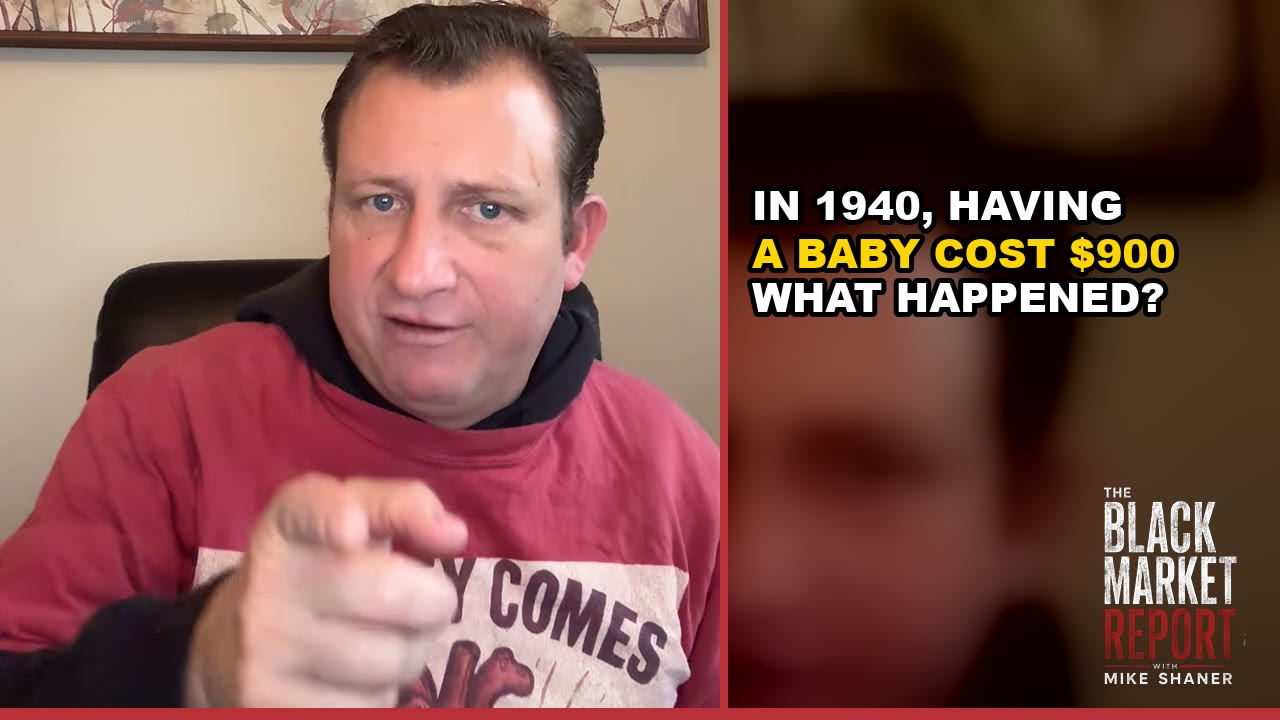
Major surgery in the same hospital was $393 and 75 cents. A minor procedure was $170. A woman could have a baby delivered and recover with the newborn in the maternity ward, with nursing care and meals, for ten days for $900. For ten days for $900. When we had our first kid and our second kid, I think the bills were somewhere around $100,000. $900 is what it would cost to have a baby and stay ten days. Nobody stays ten days; I use that for hyperbole, for the example. You could stay ten days in the hospital, deliver a baby, have the mom and the baby cared for and fed for 900 bucks.
So you can have a baby, get your appendix taken out, stay in the hospital for two weeks with the baby, get a medical degree for what one year of insurance premiums cost today. I’m going to say that one more time. That’s so important. You could have a baby. You could get your appendix taken out. You could stay in the hospital for two weeks with the baby and your appendix and get a medical degree, all for what one year of insurance premiums would cost you today. That’s today’s money. Before deductibles, before copays.
Why did I use 1940? I’m going to keep going. Patients had an all-time high level of trust in their doctors at that time. Healthcare was about relationships. It was about healing and curing. In spite of the low prices, doctors worked with poor or indigent patients. They often traded eggs and chickens, baked goods, labor, etc. When a patient had fallen on hard times, or when worse came to worst, it was charity work. So when they couldn’t trade a chicken or an egg, when they couldn’t do labor, when they couldn’t mow the doctor’s yard, the doctor did it for free. Society was healthier, society was happier, and society, the public, was bonded to the healthcare professional. The doctor was a respected member of the community.
A 2009 historical analysis titled “A Historical Analysis of Physician Dissatisfaction” was published by Yale University School of Medicine as a part of the Yale Medicine Thesis Digital Library of U.S. medicine, described in the 1940s as part of a “golden age,” where physicians enjoyed high community regard, with polls rating them on par with Supreme Court justices. They were seen as heroes in popular media, surrounded by loyal patients who admired them, and scientific advances and professional autonomy.
Everything that people loved about doctors, they loved at that time. All the innovation came during that time. Well, what happened? How did we go from affordable and effective healthcare that was the envy of the civilized world to the convoluted mess we have today? Why, the pursuit of fairness, of course. You miserable donkey, government.
In 1942, Mr. Roosevelt, Mr. Roosevelt gonna save us all. In 1942, Mr. Roosevelt was on a mission to save us all from unequal prosperity, you see. In the pursuit of equity, he pressured Congress into passing the Wage Stabilization Act. Why did I use 1940 to demonstrate all of that? 1940 was considered the golden age of medicine. Healthcare was quality, affordable, easy to access. The poorest people in the country had access to quality healthcare.
In 1942, Roosevelt signed the Wage Stabilization Act, which, of course, he was very happy to sign. And here’s the lesson of supposedly unintended consequences, and a supreme example of the damnable truth that there is nothing so terrifying as government coming to help.
The Wage Stabilization Act put a cap on executive salaries. So you know how you see all these people saying, “They hate the billionaire CEO, blah, blah, blah. We need to cut off their salaries”? Well, they tried that. They tried that, and Roosevelt was a genius at manipulating society and getting them to support his destructive bills.
The Wage Stabilization Act put a cap on executive salaries. You see, progressives have always known that villainizing the rich is a way to rally the poor, and they use this division to drum up support for their authoritarian ambitions, which they pass under the disguise of consent of the governed.
Remember what I said earlier. They know how to fuel your rage to get you to force them to pass laws that are eventually going to hurt you. They know how to use your rage to get you to make them pass laws that give them more power over you, and you think you’re making change. I’m going to say it one more time. They know how to use your rage, your anger, your jealousy, to make it seem like you’re forcing them to pass the laws that they’ve made you think you want to pass, to give them more power that hurts you.
This is a perfect example. It’s always a sham. Villainize the black man to rally the white man, demonize the migrant to stir the national, and out of the propaganda, the populace becomes divided, and power consolidates.
When I wrote this, the day I wrote this, I saw Nick Fuentes say the right must bend on the free market, compromise on healthcare and the social safety net. Nick Fuentes, I don’t know why people like him, but Trump and Fuentes seem to be the same person. This should be a lesson in why you should ignore Fuentes’ government adoration, because look at 1942.
Prior to 1942, health insurance was a fringe benefit. Think of Aflac today, or supplemental insurance. It was something most people didn’t have, didn’t want, didn’t need. If you have plenty of extra money and you thought you were going to have a catastrophe, just like you would get Aflac or something today, that’s what health insurance was in 1940. Prior to 1942, health insurance was some sort of fringe benefit, maybe like Aflac or supplemental insurance today. It was nice to have, and some people did, but it wasn’t common, and it was certainly not thought of as a necessity, until government decided to cap wages and businesses needed a way to attract talent.
You can guess where we’re going from here. They started paying employees’ medical insurance, and before you know it, we moved from a doctor-patient healthcare system to an employer-based insurance system. Like everything government touches, prices became astronomical, and care suffered.
Somehow, though, it was something the 1940s mind couldn’t comprehend. The system evolved, and we made it work. It wasn’t great, but it was okay. People could live with it. You shouldn’t have lived with it, though. We shouldn’t have. Our parents, your grandparents, your great-grandparents, they shouldn’t have lived with it, because they sold us out. They sold us out to feel good, and that’s what we’re doing to our grandchildren. We’re selling them out to feel good. We’re saying, “Hey, government, take care of these things,” and what’s going to happen is somebody’s going to be sitting here speaking into the void, to blind eyes and deaf ears, saying, “Hey, if they had only stopped this in 2026, if they had only mounted together and stopped this in 2026.”
But they learned to live with it. They gave your healthcare to your employer and insurance companies. They gave your healthcare to corporations. If the government controls your food supply, if the government controls your medicine, if government controls the flow of information, if government controls the money supply… come on.
So anyway, people learned to live with it. Government, on the other hand, they couldn’t live with it. They got a taste. From that moment on, we had to have universal healthcare. In 2006, it was called Romneycare. Mitt Romney, the great champion of limited government, Republican. In 2006, Romneycare became the law of Massachusetts, and by 2010, the name had changed to Obamacare, and it was federal law. Now they call it the Affordable Care Act. It was always the title, but it was Romneycare before it became Obamacare. It was a Republican idea before it was a Democrat idea. Republicans nominated the man who invented Obamacare to be the president and run against Obama. Republicans hated Obamacare, but they liked Romneycare. They’re all the same team.
Healthcare was completely stolen from the individual at this point and delivered hook, line, and premium to the insurance companies. How anyone couldn’t see this coming, how anyone thought forcing customers to go to a company was going to be good for customers. Forcing customers into an industry was going to be good for customers. They’ll fight with you about it still today.
First, we were told we had to pass the bill to see what was in the bill. Remember that? Nancy Pelosi: we have to pass the bill before we can know what’s in the bill. She was honest, though. She was telling the truth. She was looking at you down the eye, and she was saying, “You’ll know when we tell you. What we’re going to do is we’re going to pass it. Then we’ll read it. What we know is the government wants to pass this. The insurance company, the corporations, they want us to pass it. So we’re going to pass it. After we pass it, we’ll tell you what’s in it.”
First, we were told we had to pass the bill to see what’s in the bill. But we could keep our doctors, we were assured, and everyone will be covered. Premiums necessarily will decrease. This is how they sold it to us. It was a progressive rally. Now progressives will deny that. They will say they never were for that.
They voted for it, and they reelected the man, and they gave him a Nobel Peace Prize. It turns out, once they passed the bill and we got to see what was in the bill, that those things they told us were not true.
According to Kaiser (now, Kaiser was very much a champion of this), according to Kaiser, the average health insurance premium for a family of four in 2009, before Obamacare was passed, was $1,115 per month. So at the time, the average family paid $440 a month for insurance. In 2009, the average copay for in-network primary care office visits was $20, and for specialty care, $28. In 2025, the 2009 average copay is equated to about $30 for primary care and $42 for specialty care. In 2009, among employer-sponsored plans with a general annual deductible for family coverage, the average aggregate deductible was, after inflation, $2,308.
In 2025, the average employee contribution for employer-sponsored family health insurance is $6,850, or about $571 per month for the family, from a total premium of $26,993, so $2,249 a month. The average aggregate deductible is approximately $4,100. Patient satisfaction with U.S. healthcare quality dropped from 55% rating excellent or good in 2009 to 44% in 2024, per Gallup, amid post-pandemic declines. Wait times surged from 20 days to 31 days in 2025.
In 2009, insured patients generally had greater freedom to choose doctors, clinics and treatments, with broader networks and fewer restrictions like prior authorizations, though many were uninsured. By 2025, expanded coverage increased access, but narrow networks, high cost-sharing and insurer controls, e.g., formularies, utilization reviews, limit choices, often penalizing out-of-network care or denying treatments. Overall, patients had more control in 2009, while insurance companies exert greater influence now, and that leads us to today.
So if you’re still with me through all of that, I know it got boring because I was reading numbers, but the numbers are important. So overall, in 2009, insurance cost less and we had greater access than we did today. Pre-Obamacare, we had greater access and it cost us less. Post-Obamacare, we have less access and it cost us more.
Now, many progressives, Nick Fuentes and, secretly, the neocons want to give government even more control. This was before today’s news came out; I wrote this before Trumpcare. Many progressives, Nick Fuentes and neocons want to give government even more control over the industry they have crippled and humiliated. I know socialism’s all the rage, and free or single-payer healthcare sounds amazing, but history proves it won’t be. It’ll be worse. If you don’t believe me, ask a veteran how he feels about his government-provided healthcare. It is shameful.
Whenever there’s an issue that needs help, remember this: government is the saddest of evil clowns and the king of all grifters, with no production value or other value. Its one sinister skill is being a master at sleight of hand.
I know that was a lot, and it’s a lot better if you go read the article than me reading it to you. Go to blackmarketcattle.com and read it. But the point is, every time government got involved, healthcare became more expensive. Government tried to fix that by getting more involved. Healthcare became more expensive. Government tries to fix it by getting more involved. Healthcare becomes more expensive.
If you want affordable healthcare, start with something very simple. Do you know that if I live in Alabama and I want to buy health insurance in Oregon, I can’t do it? Oregon health insurers don’t have to compete with Alabama health insurance. If they did, everybody would go to the lowest-cost states, and health insurance would come down. We can’t immediately untie insurance from the healthcare. We can if you do what I want you to do and start opting out.
I’ve told you about healthcare. I hope you’ll share it. I hope you’ll go and share the article. I hope you will get you a Charity Comes From the Heart, Not the Government T-shirt, because I do care about charity, and I do care about helping people. And I know the government can’t do it.
And I know that if you want to say, “Hey, you have to believe in taxation, because we have to help people”… Taxation: the government is responsible for more murder, more death, more torture, more pain, more suffering of poor people the world over than any entity in the history of the world. And your taxes go to that. So no, you can’t tell me you have to pay taxes if you care about poor people. If you care about poor people, you get government the hell away from them. That’s the truth. If you care about poor people, rich people, any people, you get government out of their lives.
Well, people are dependent on government right now. You’re right. You can’t yank their safety net right out from under them. We’ve taught them to be dependent. We’ve made slaves out of them, basically. You can’t take it away from them. You’ve got to have a graduated process. But you can refuse to enslave future generations, and especially refuse to give government more access to our future generations. There will be a pain. It will hurt. But I would rather it hurt me. I would rather go through that time than my children, because my children didn’t cause it. My children aren’t standing for it. They’re babies. They deserve a future. They deserve a chance, and government robs them of that.
I don’t need the world to abolish government. This leads me into my final segment. I don’t need the world to abolish governments. I wish the world would abolish governments and everybody would follow Christ. But I don’t need that to happen. What I need to happen is to build a big enough community, to build enough smaller communities that the weight of government cannot crush us. If there are enough of us who will opt out and who will build competing communities, competing commerce, competing currencies, we can ignore what government does. We can make it so uncomfortable for them that it doesn’t matter. And then all the people who want to opt into that system, have at it. I just want an alternative. I just want an alternative for peace and prosperity to reign.
How do we heal, speaking of healthcare, how do we heal a sick society? There’s no way to vote your way to prosperity. There’s no way to vote your way to liberty. Nothing we can do right now is going to fix that. The only way that we can fix what’s wrong is to create a culture that cares, a culture that isn’t looking to blame, a culture that isn’t looking for an easy fix, a culture that’s willing to say, “Hey, I’ll succeed or fail on my own merits.”
I’m willing to help my neighbor. I’m willing to help poor people. I’m willing to not judge people because of where they’re from or what their thoughts are. I’m willing to judge people by their character. I’m willing to be your neighbor. I’m willing to help you raise the barn.
Because as much as libertarianism is a great philosophy, it can only work if enough of us care to adhere to the principles and the accountability and the responsibility that it requires. And then it doesn’t matter. It doesn’t matter what government does, what society does. If there are enough of us who are willing to participate in our own commerce, if there are enough of us who are willing to provide charity, if there are enough of us who say, “Hey, you’re not going to steal our money out of our paychecks anymore, and in return, we’re not going to take your Social Security and whatnot.” You exist over there and we exist over here, and we’ll work together. More people come to our side, but we have to have enough of us willing to show it.
The ideas are all written down at blackmarketcattle.com, along with the T-shirts and everything else. You can watch the videos there. Thank you so much for joining me today. Please, please, please subscribe to blackmarketcattle.com. Please follow me wherever you’re seeing this, if it’s Facebook or TikTok. Please subscribe to Mike Shaner.
Follow Mike Shaner on Instagram and X, especially Instagram. I really need that one to go up. But more than anything, go and subscribe to blackmarketcattle.com, because when government colludes with social media and decides that I no longer should have any reach, we still need a way to talk to each other. So I own my email list. I own blackmarketcattle.com. And if we can stay connected there, we can stay connected no matter what they want us to do. So please join. Please subscribe. Please have a blessed Thanksgiving. Turn to Christ. I will talk to you next week. Thank you.
From Mike Shaner’s Wednesday afternoon live, November 25, 2026, the eve of Thanksgiving. Watch it here.
The essay he reads from on this live: How Government Destroyed American Healthcare.
The shirt he wore: Charity Comes From the Heart, from the Liberty & Anti-State, Faith & Christ Is King and Faith, Family & Farms collections.
He’s 90-some Instagram followers away from going live there too: instagram.com/mike_shaner
Chapters
00:00 The best of this live
00:50 Thanksgiving Eve edition: welcome
01:04 Trump open to Medicare for All as Trumpcare
02:21 Trump, a liberal on healthcare
03:51 Just like COVID: both sides will bend
05:03 Iran and Epstein are COVID for conservatives
06:10 No credit from Democrats, no blame from Republicans
06:35 Remember Taxed Enough Already?
07:20 Ukraine: $20 billion for a war he’d end on day one
07:51 Epstein files: if it’s a hoax, release it
08:28 The lifelong friends I lost over COVID
09:44 I forgive them: forgiveness is for you
11:03 Old Tea Party friends who block me now
12:36 Red cult, blue cult: the same cult
13:05 Why I focus on government
13:27 Opt out and government is toothless
13:59 Follow me: 90-something more on Instagram
15:23 Back to Trumpcare
15:45 Selfish? Compare my community record
16:31 Charity comes from the heart, not government
17:10 Called names on Bluesky
18:28 I grew up poor. I love poor people
18:55 Why we call each other names online
19:46 How I came to my beliefs
20:49 The history of healthcare
21:37 Corporations and insurers control your care
22:00 Government’s how we got here
22:25 We already have government-run healthcare
23:04 Can’t run a post office, can’t run a war
23:26 80 percent say he sucks, then re-elect him
24:23 Go to the VA
24:55 My grandfather at the VA
26:04 Time capital: they plan three generations ahead
27:37 Last show of the week: Thanksgiving
28:51 Reading: How Government Destroyed American Healthcare
30:21 1940: a $2 house call
31:13 Medical school for $11,700
31:35 A hospital day for $90
32:24 Having a baby: ten days for $900
33:02 All for one year of premiums
33:35 Why 1940? Trust in doctors
33:51 Eggs, chickens and charity care
34:33 The golden age of medicine
35:18 What happened? The pursuit of fairness
35:43 1942: the Wage Stabilization Act
36:44 Nothing so terrifying as government coming to help
37:26 Villainize the rich to rally the poor
38:33 Nick Fuentes and the free market
39:03 Health insurance used to be like Aflac
39:45 Wage caps made employer insurance
40:18 They sold us out to feel good
40:57 They gave your healthcare to corporations
41:31 Romneycare became Obamacare
43:16 Pass the bill to see what’s in it
43:52 Keep your doctor, premiums go down
44:25 2009 versus 2025: the numbers
46:11 Satisfaction down, waits up
47:23 Less access, more cost
48:23 Ask a veteran
49:16 Every time government got involved
49:33 Start simple: insurance across state lines
50:10 I do care about charity
50:48 Get government away from poor people
51:25 Refuse to enslave future generations
51:51 I don’t need the world to abolish government
52:09 Build communities government can’t cross
53:04 How do we heal a sick society?
53:28 A culture that cares
53:51 Willing to help my neighbor, raise the barn
54:18 Libertarianism only works if enough of us care
55:24 Own the list: blackmarketcattle.com
56:31 Happy Thanksgiving. Turn to Christ
Shorts from this live
Every Short from The Black Market Report
Newest first. New Shorts are added here by themselves as they come out.